
A Good Egg
A simple egg. A quiet exercise. A small gift. What happens when we slow down long enough to really see?

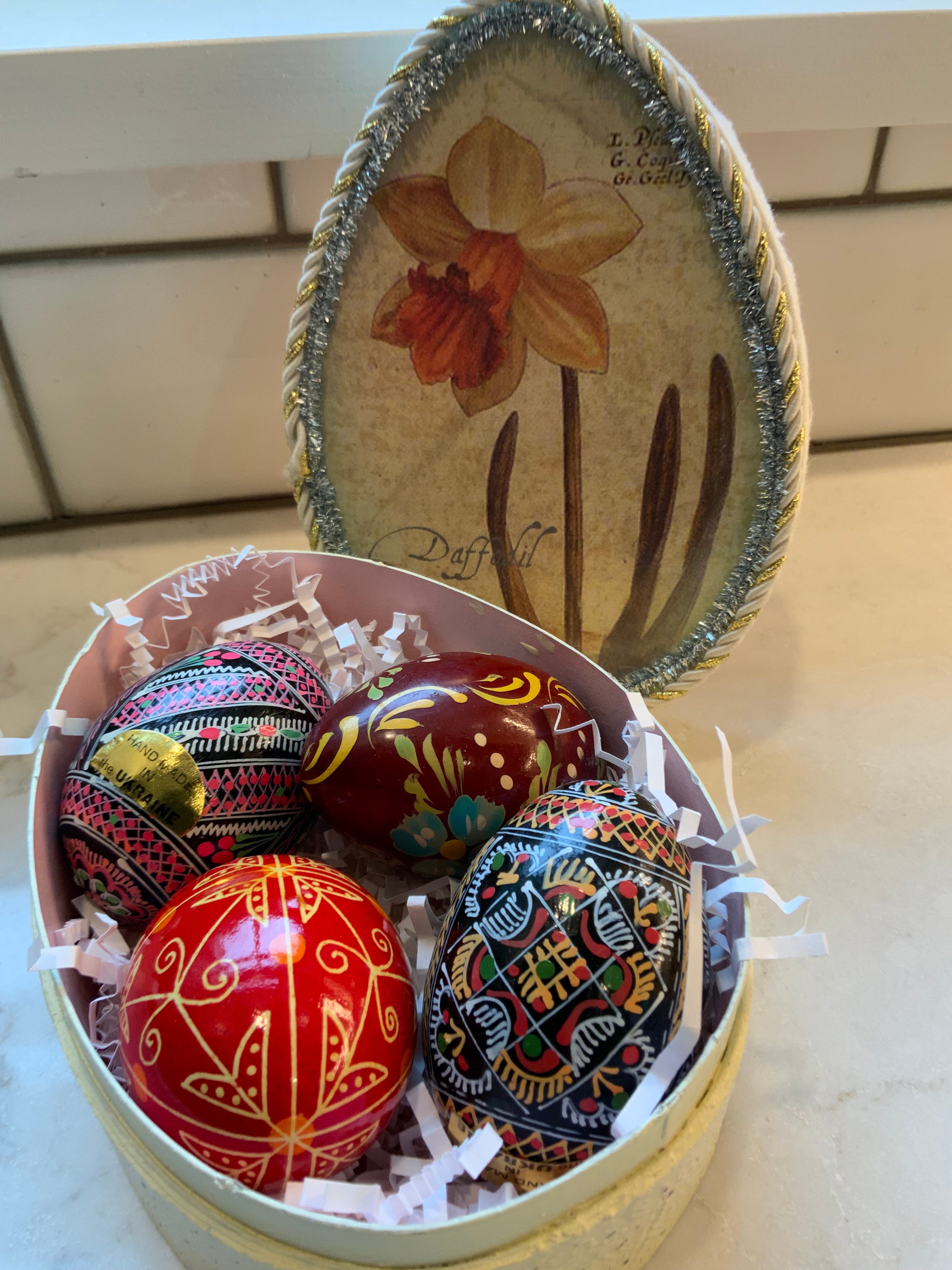
Layers of color. Layers of care. A story written one dip at a time.
A Good Egg
A few weeks ago, a dear friend and loyal reader gave me a small nest filled with six beautifully crafted Ukrainian pysanky—those intricate, Eastern European, hand-painted eggs that look as though they’ve been whispered into existence rather than made.
They were lovely. Colorful. Delicate in a way that makes you instinctively lower your voice when you hold them.
And they were given—to me.
I was deeply touched by the thought. And even more moved by the care behind it. This was not a grab-and-go gift. This was a you gift. The kind that says: I see you. I know you. I’ve been paying attention.
Pysanky are not casually made. They are dipped repeatedly in dyes, starting with something light and bright. Then patterns are drawn in wax. Then dipped again. And again. Each layer darker, richer, more deliberate. Wax, dye, wax, dye—until what began as a simple egg becomes a small, riotous explosion of color and intention.
A story, really. Written in layers.
After the surprise wore off, I found myself wondering how this friend had come to know me so well. How did she know about the Eastern European roots, the quiet pull of traditional arts, the part of me that leans toward the handmade, the storied, the slightly old-world?
And then, of course, I thought: Well, she reads.
Right here. Quiet Roars.
How else would she know?
And for just a moment—a brief, flattering, slightly ridiculous moment—I believed it. I believed that if I write it, and you read it, then that must be who I am.
Clear. Defined. Understood.
Silly me.
Because nothing is ever quite what you say it is.
And everything—everything—is what someone else sees it as.
Stay with that thought for a bit.
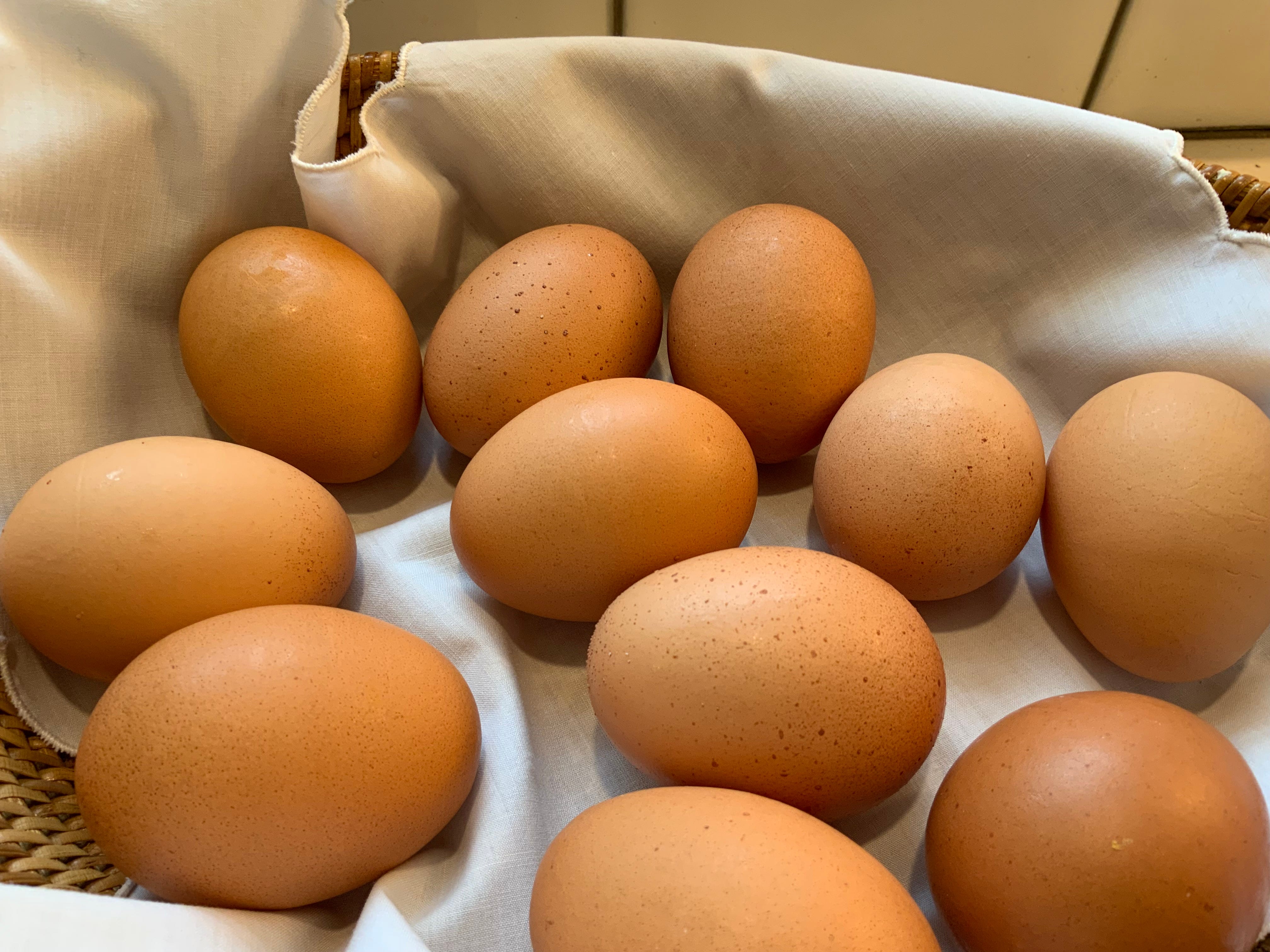
Choose one. Sit with it for a while. Watch what happens.
Let me explain.
The egg.
Yes, that egg. The humble, oval, fragile-shelled thing that shows up next to buttered toast and a cup of coffee. The one we crack, scramble, flip, and rarely think twice about.
That egg.
It was the star of some of my most memorable writing workshops.
Third graders. School superintendents. Teachers. Administrators. People who believed they had seen it all—and people who were just beginning to notice anything at all.
All of them, at one point or another, sat quietly with an egg.
In what became known—only half-jokingly—as “the egg workshop,” I would bring in a couple dozen eggs. Not hard-boiled. Not decorated. Not special in any way. Just straight from the carton to the writing table.
I’d ask each participant to choose one.
Carefully.
As if this mattered.
Then I’d ask them to place it somewhere safe and…sit with it.
No jokes. No chatter. No immediate writing.
Just sit.
My goal was modest. Almost suspiciously so. I wanted them to slow down long enough to find a few descriptors. Maybe write a five-sentence paragraph about—well—nothing extraordinary.
An egg.
In my mind, I loosely connected it to those high school assignments where students carry around a five-pound sack of flour to simulate caring for an infant. Responsibility, attachment, awareness.
This was…a gentler version.
No one had to name their egg.
(Although some did.)
The younger kids ran with it immediately. Of course they did.
Their eggs had lives. Personalities. Opinions.
They gave them names. They assigned them best friends. They imagined them playing games, growing legs, whispering secrets.
They noticed everything.
A tiny flaw in the shell. A faint speck. A subtle ridge you wouldn’t see unless you really looked. They described color variations I hadn’t even registered.
By the end of the session, many of them could identify their egg from across the room. Not by guessing—but by knowing.
I wondered if the adults would be as observant.
Of course, grown-ups—especially the ones with advanced degrees—arrive with a certain confidence.
Or, let’s call it what it is: certainty.
They laughed. They sighed. There was some good-natured resistance.
“This is what we’re doing?”
Yes. This is what we’re doing.
(Also, there may have been the promise of lunch. And cookies. I am not above strategic motivation.)
But eventually, they picked up their pens.
And once they got going—just like the children—they ran with it.
Every time.
Every single time.
They noticed. They described. They compared. And then, almost without realizing it, they connected.
These thoughtful, measured, professional adults began writing about their eggs as if they mattered.
Because suddenly, they did.
They imagined futures. They assigned meaning. They told stories.
One egg was being carefully dyed for the Easter Bunny. Another was destined for a relay race, balanced precariously on a spoon. One participant placed their egg at the head of the Seder table—a position of honor, reverence, and symbolism.
Talk about respect.
What started as an exercise in description became something else entirely. A quiet invitation to slow down. To observe. To allow meaning to emerge from attention.
And that, I think, is the point.
The pysanky sit now in their small nest, not far from where I write. I look at them often. Not just for their beauty—but for what they represent.
Layers.
Intention.
Care.
And the understanding that what we see is never just what’s there—it’s what we bring to it.
My friend saw something in me and reflected it back in the form of these eggs.
The children saw stories.
The adults saw meaning—once they allowed themselves to look long enough.
And the egg itself? The plain, unassuming egg?
It reminds me, again and again, that if a person can stay still—even for a moment—and really look, it is possible to learn something essential.
To see.
To connect.
To know.
To grow.
All from something as ordinary as a little egg.
Which, it turns out, is never just an egg.
Author’s Note
Author’s Note: This piece grew from years of classroom practice—and a recent, unexpected gift that reminded me how much we reveal when we simply pay attention.
Read Helaine’s Featured Author interview on Grande Dame Literary:
https://grandedameliterary.com/helaine-fiedler-writer/
An egg is a quiet, elegant, grace-filled source of life which inspires artistry and that in turn begets memory, thought, inspiration .....
If you had to sit with an egg for ten minutes… what would you notice?